Showing posts with label N-Scene Photography. Show all posts

Wednesday, August 12, 2015

Thursday, March 26, 2015

BAD WEATHER PHOTOGRAPHY

Have you ever had one of those days when you looked out your window and wished that the weather was better so you could get out and take some fantastic photographs? Do rainy, windy, stormy days stifle your photographic ambitions? Well listen up there are no specific weather condition to shoot totally awesome photographs. I'll give you some reasons why bad weather is not such a bad thing for photographers.


Let’s look these five reasons to appreciate bad weather, and what they can offer you for photographs that get that second look.

  1. Clouds
  2. Winds
  3. Rain
  4. Snow
  5. Fog   
CLOUDY DAYS
Clouds can be a great backdrop for photographing old buildings, new skyscrapers, and trees. While you're out in the storm, also think about shooting just the clouds by themselves, to create a “cloud bank” of images to use as drop-ins for compositing with other images. Clear blue skies are pretty boring in most photos. With your catalog of cloud shots you’ll never have a bland sky photo again. Low hanging clouds can add a really mysterious quality to your images. Think black and white photography when considering ways to take advantage of clouds. You can use post-processing techniques to accentuate the various layers of the cloud formations to add even more drama to your images.
WINDY DAYS
Windy days provide you with all you need to make excellent motion studies for long exposures – tall grasses flowing like waves, tress swaying wildly, leaves trembling and dancing full of motion. Waves on lakes become whitecaps, perfect for those milky long exposure waterscapes.
Use a neutral density filter to slow your shutter so that it captures the motion created by the breeze. Use a tripod for your wind shots to make sure that whatever is not moving in your image stays nice and sharp. The contrast of solid and fluid is a powerful creative technique.
RAINY DAYS
Water on leaf
Water on Leaf by Nicholas Small copyright
Rain is the go to element for creating truly artistic photos, especially when it comes to creating high definition black and white photos of landscapes, buildings and architecture
When it’s wet outside, colors become deeper, richer and more saturated. This provides you with a way to look at the great outdoors in a “different light.”  Observe how flat and lifeless colors appear on an overcast day. But add some rain and the colors really pop! Rain photography gives you hundreds of subjects for creative artistic photos using reflections and ripples in puddles, lakes and other water bodies. A wet rainy day gives you macro photography opportunities, by providing you with drops, ripples, and rivulets, perfect in the flat, even light of a rainy day. Use rain streaks on windows as art effects to make high impact abstract images.

SNOW PHOTOGRAPHY
Gently falling snowflakes in photography can add an additional element of emotion to add more impact to your images – who hasn't felt a little shudder in the blustery cold? It can be used to create a sense of realism in a photo, especially in street photography.

Heavy falling snow adds an instant texture to your images. Colors appear softer, and less vibrant as they compete with the white of the flakes. I find it adds an instant painterly effect to most images – especially those with lots of natural colors. 

FOG PHOTOGRAPHY

Fog can be used to create moody and high impact scenic shots, great for storytelling, and it can be used as a “backdrop” to hide distracting backgrounds to isolate your subject.  It also add a sense of mystery to your photos. If you ever wanted to create an awesome photo try taking one of a large home or mansion during a light foggy day. the effects you get will take you hours to create on Photoshop or any other image editing software.

Just remember this its not going to always be sunny everyday. As a photographer be prepared to always shoot something whether its hot and sunny outside to the snow as its falling or may be after the snow falls and everything in between. Carry your camera at all times and protective gear for yourself and your equipment. You never know when inspiration may strike.

Who knows maybe you may be able to capture the next big tree that fell in your neighborhood during the last major storm. It might event be used in the local or major news. so let go out there and capture some amazing photos be it rain or shine.

Monday, February 16, 2015

Here We Go Again....

I am baaaaack. Like the guy said in that scary movie. I here ranting and raving about these ads that are posted on craigslist. You know the one asking for Looking for a photographer for my blog: college student preferred.   and then they have the nerve to tell you next "I'm looking for a photographer to work with me by taking pictures for my blog. My blog/website is brand-new, just starting up and I'm very serious about it so I'm looking for someone serious also. This won't be a paid gig but you can add these photos to your portfolio and expand your experience and maybe will turn into a paid gig in the future. I'm looking for someone who can pitch in ideas and is willing to get creative. I am new into this field so I'm looking for someone who is willing to grow with me, as we can help each other out. 

Based on the above information, I think this gig is ideal for a college student or someone who is new to the photography field interested in gaining some experience."

                    First of all when you tell me this is not a paid gig and that I can use the photos in my portfolio. Guess what buddy that's where you are fooling yourself, the photos are still mine. You didn't pay for them. You can't grant me the rights as to how I use my photos that I took with my camera if you did not pay for the photos and sign a contract saying how it will be used. If that's the case get you self a point and shoot and take the pictures yourself. Second if I am supposed to pitch ideas and willing to get creative and willing to grow with the company a partner or a Creative Partner. Third if she/he are college students they should  have more than the expected knowledge and experience needed in order to get the job done. They may not have the experience doing it on professional level but they have the practical and education to back them up.  Well Ye sir I'm gonna work with your company for sure. This is all I gonna say to all my photographers, musicians, artists, illustrators. Stop letting these idiots get over on us. Let them pay for something. If the can't pay for at least a tenth of the price of your camera gear that you are gonna use on a shoot. You can tell the to stick it somewhere.

Thursday, January 22, 2015

Stock Photography 101

1. Get model releases early

Asking for a model release before the shoot will make your life much easier, and your model will have more opportunity to clarify how he or she would like the photos to be used.

2. Take time to keyword your photos

I’m still new to this, so I have made a lot of mistakes in key wording. To help me and fellow photographers, our editors put together a list of handy tips on how to keyword your photos. The key to key wording is to think like a buyer. Whether they look for emotions (bonding, happiness, empathy) or traits (individuality, simplicity, beauty), try to extract what words your photo can express. According to some experts, the ideal number of keywords is 20-25, but they have to be relevant. Spam keywords can actually hurt your photos.

3. Photographers are their own worst editors

I have noticed it before, and it is even more relevant when trying to get into stock photography: photographers are usually their own worst editors. In the past, the photos that I hated got picked for a full spread in magazines, but photos that I loved got rejected altogether. The key takeaway is to upload more photos, both good and bad, because what you may think is bad could be perfect for the editor or creative director.

4. Be the supply to the demand

As a photographer, you market your photos to buyers. So in order to be successful, it’s important to sell what’s in demand. It doesn't mean going against the grain and shooting something you don’t believe in, but lack of supply in areas of high demand is a lost opportunity. There is a lot of research of what’s in demand in stock photography (authentic imagery, filtered photos à la Instagram, texture patterns, breathtaking landscapes), so you can be in sync with the market. r. 

5. Be aware of brands and logos

I learned this one a bit too late, so it cost me a few hours of work in Photoshop. For commercially licensed photos, make sure your photos don’t have brands, trademarks or related graphics in them. For example, my photo of a model in a shopping mall was rejected because there was an Adidas Store in the background. Same goes for swoosh logos, famous fruit logos and so on. Interestingly enough, some brands will add their logos in post production!

6. Be a thought leader

To be successful in selling stock photography it’s important to market yourself. Every single photographer who makes five to six digits a year selling stock photography invests heavily in marketing. While spending money on ads might be one way of promoting yourself, marketing your particular area of expertise is a better way to achieve a good following and sales. Write about your photo shoots, travel, tips and tricks that you have learned doing what you love.  So by writing this blog post, I’m promoting myself, also.

7. Master your domain

While you can submit all the photos you want, being a master in just a few domains can help. Create your own style, and art directors will be forever grateful. They are always on a lookout for fresh, authentic imagery, so having photography that stands out is a key to a successful sale.

8. Keep the bar high

Sometimes I like to make photos a bit more grungy, by adding excessive vignetting or simulated film grain. While it looks great on my profile or in print, I found my photos to be rejected because of this. Now I keep a separate copy of the same photo that is as clean and noise-free as possible to submit for licensing. 

9. Save some space

When I shoot landscapes, a lot of composition rules apply to composing or cropping the shot. By positioning key aspects of a landscape on points of a geometric shape you can help create a balanced composition. Perhaps the most common and easiest way to do this is to use a ‘triangle’ shape between objects in an image with three objects in a frame positioned with one to each side and one more central.

10. Go out and shoot more!

Lastly, the only way to get better at taking photos is to go out and take more photos, to try new techniques and to go to meetups with fellow photographers. Photos nowadays get dated very quickly, so to keep myself in shape I get out regularly!

Tuesday, January 6, 2015

Car Vandalism on the rise as the New year rings in

As we sleep in our beds at night, reassured of things inside our home are safe and secure.  We awake to a horrific shock some mornings to finds our car tires out of air.  This may sometimes due to the drastic change in temperature and poor tire inflation practices.   What has come to my attention are the vandals who taken their time to puncture the tires of individuals who park their cars on the street our even their driveways as they sleep at night.  On the night of January 2, 2015 I got up the next morning to go about my errands to find two of my car tires slashed.  Not only my tires but also three of my neighbors on the same street.  The individual was caught on camera doing the act, but his face was not seen due to the fact that he was wearing a coat with the hood pulled over his head. Photos below are are of the several cars on my street that was affected by this criminal.

Friday, June 27, 2014

What is Stock Photography


Stock photography is the supply of photographs, which are often licensed for specific uses. It is used to fulfill the needs of creative assignments instead of hiring a photographer, often for a lower cost. Images can be presented in searchable online databases.  You have such sites such as: shutterstock, fotolia, istockphoto, shutterstock, Getty Images, and Corbis that sell your images and give you a percentage of the image that was purchased through their site, something like 20%.  There are many more sites by photographers like myself that are offering stock images that you can either use for your personal use and not in any commercial products advertising unless it is licensed by us to do so in the agreement. They can be purchased and delivered online in digital format (JPEG) or in printed format with various sizes, frames and textures such as acrylic, wood, metal and canvas. All images should be copyright by each photographer to prevent from someone else stealing and using your work and getting paid for it. This way if you find out you can take the to court for fraud and and other charges the courts may see fit to file the perpertrator. Selling your own stock photography can be very lucrative to those that find the right company that want to license the particular photo or photos for some commercial advertisement or maybe even a cover of a magazine such as cosmopolitan, black enterprise, and other big named publications. The name of the game is to produce excellent work and market yourself.


Monday, April 28, 2014

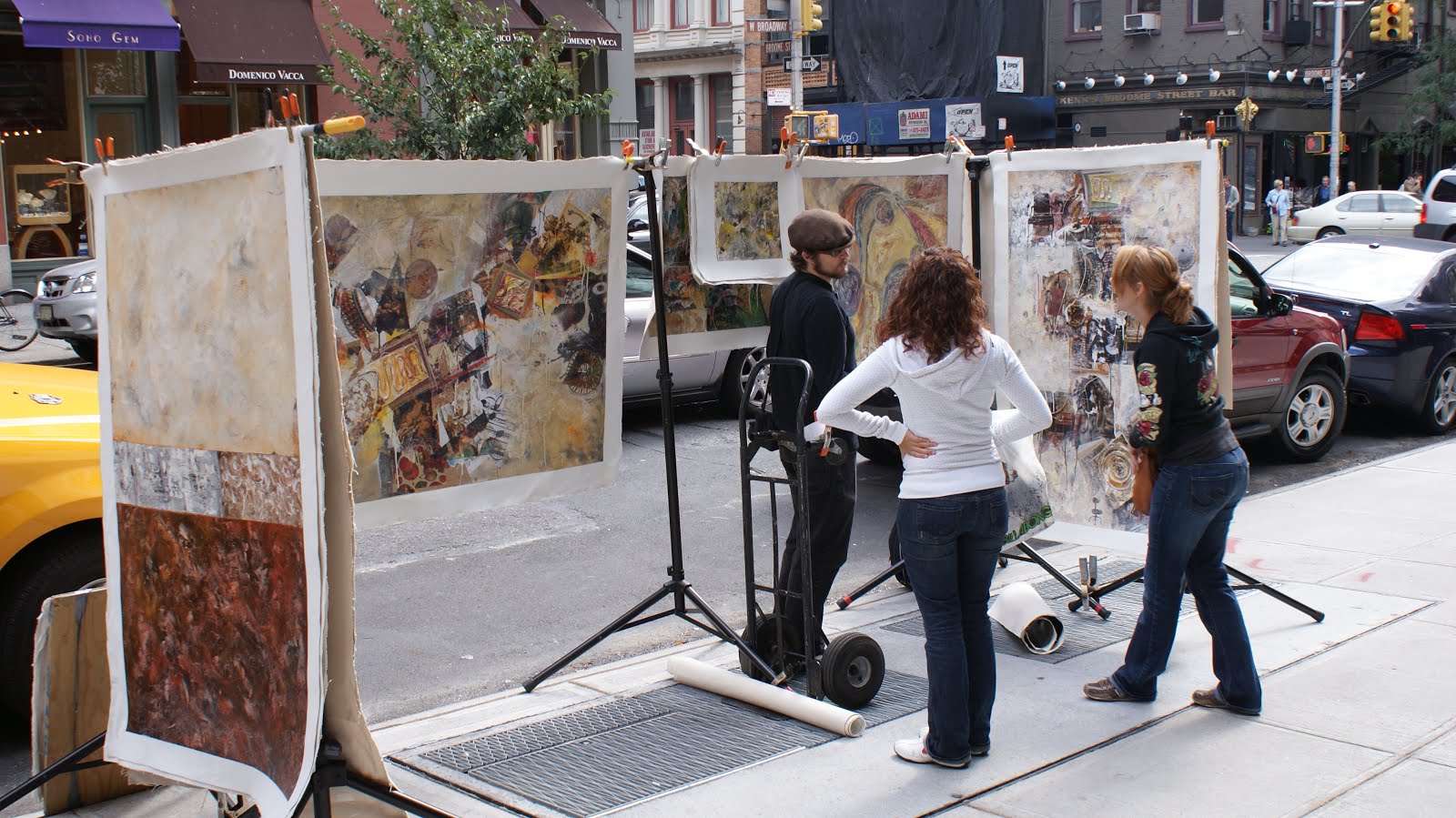
How to Sell Photos on NYC Streets

How to Sell Photos on NYC StreetsVillage Art_On Canvas (6).JPG


Turn your love for photography into $cash$ by selling your photos as an NYC street artist. New York City allows for a high probability of selling due to the diversity of tourists and residents. Very few street artists who sell photographs present their photos in frames, which is a money saver. Mount your pictures on cardboard or slip them in plastic sleeves for protection. New York City doesn't require artist vendors to have permits, but you must have a state tax ID on you while you're selling.

    • Obtain a state tax ID. Visit the New York State Online Permit Assistance and Licensing website to apply for a tax ID. Click on "Permits by Agency," then "Taxation and Finance, Department of" and then click on "Certificate of Authority to Collect Sales Tax". The form to fill in is DTF-17.
    • Review New York City's vending laws. Street vendors who do not sell food are referred to as "written matter vendors". As someone selling
    • photographs, you will want to thoroughly review all laws that pertain to "written matter vendors." These laws include, but are not limited to, when and where you are allowed to sell your art (photos) and the size requirements of your area of selling. Vendors selling art in the streets are protected by the First Amendment right of free speech. To get a copy of these laws, contact the Department of Consumer Affairs (DCA) in New York. You should also ask for a separate copy of "List of Streets Restricted to Artists and Book Vendors."
    • Pick your time and place, set up your stand and photos and start selling them to passers-by. According to the artist vending laws, just about any public area in New York City's parks and streets are open any time for selling your photos. A few restrictions apply and are outlined in the vending laws document from the DCA. Set up your spot according to regulations and put out your photos so they are visible to people passing on the street. Sell your photos to any who want to buy them for a price that is acceptable to you and the buyer.
    • Only sell art on sidewalks more than 12 feet wide. Your art display can only be 5 feet high, 8 feet long and 3 feet wide
    • Always stand 20 feet from doors if they open to a building that is commercial in any way. If it's a residential building, you can reduce that to 10 feet. Never touch or attach your display to city property such as fire hydrants, telephone poles or signs. In parks, you can't block walkways or touch benches.
    • Obtain permission from an owner before you prop your art against his property, which includes fences and signs. Never display the art you're intending to sell on your car.Set up your stand on almost any street or in any park. In most places, you can sell your art 24 hours per day. Some complex rules apply to people selling art on the specific streets, such as times when selling is prohibited and certain circumstances under which you cannot sell art on a street (see Resources to check if any restrictions apply to a street that interests you).

Thursday, March 21, 2013

Junclassic Speaks

Junclassic of Dynamix gives an interview in HipHopgame . Junclassic being a true to the game underground artist keeps it real in his latest album release BLVD Backdrop